Busuu: Learn & Speak Languages
- 4.7
- Rating
- 50.00M
- Installs
- Free
- Price

 Analysis by App-foxy
I found Busuu: Learn & Speak Languages easy to approach when I wanted structured language practice without committing to a classroom schedule. It is an Education app from Busuu, available for free with optional in-app purchases ranging from $0.99 to $169.99 per item. The app covers several languages, including Spanish, Japanese, French, English, and German, so it is aimed at learners with very different goals and starting points.
My overall impression is that Busuu works best as a guided daily study tool rather than as a complete replacement for conversation, a teacher, or immersion. It gives me a clear route through lessons, but it also asks me to read, listen, tap, type, and sometimes speak. That mixture can be useful for building a habit, while also creating barriers for people who need a simpler interface, reduced sensory load, or a learning method that does not depend heavily on written text and audio.
How Busuu feels to use across different abilities and situations
I find Busuu most useful when a learner needs a clear next step rather than another open-ended resource. In this section, I look at how that guided structure can feel different depending on attention, sensory needs, and the time or setting available for study. Those differences matter because a routine that works at a quiet desk may need a lighter touch on a busy day.
You May Also Like

 Pandora - Music & Podcasts
Pandora’s Music Is Easy to Start, but Harder to Recover
Pandora’s strength is its low-effort path from a seed to a station. Its weak spot is how much confidence it asks you to place in connection, setup, and quiet recovery.

 8 Ball Pool
 Is Built on Rivalries, Rematches, and Routine
A close look at the rivalries, rematches, shared routines, and unanswered safety questions that turn a quick pool match into a persistent mobile community.

 Samsung Music
’s Quiet Strength Is Playing What You Already Own
Its reach comes less from spectacle than from dependable access to a personal library. That simplicity is both the app’s strongest retention engine and its ceiling.

 AccuWeather: Weather Radar
AccuWeather Review: A Quick, Clear Forecast for Everyday Decisions
For everyday plans, the best forecast is the one you can understand quickly. AccuWeather makes rain timing, radar, and local conditions easy to act on, with a few trade-offs.

 Hill Climb Racing
Why Hill Climb Racing Still Turns Crashes Into One More Run
A tiny car, a bumpy hill and one more upgrade: Hill Climb Racing keeps resurfacing because its simple chaos makes every near-miss feel personal.

 AliExpress - Shopping App
AliExpress Makes Global Shopping Feel Personal, but Shoppers Bear the Risk
AliExpress turns a global marketplace into a pocket-sized discovery engine. Its reach is useful, its shopping loop compelling, and its trade-offs easy to miss.
More From Our News Desk
View All News


Readability and navigation during ordinary study
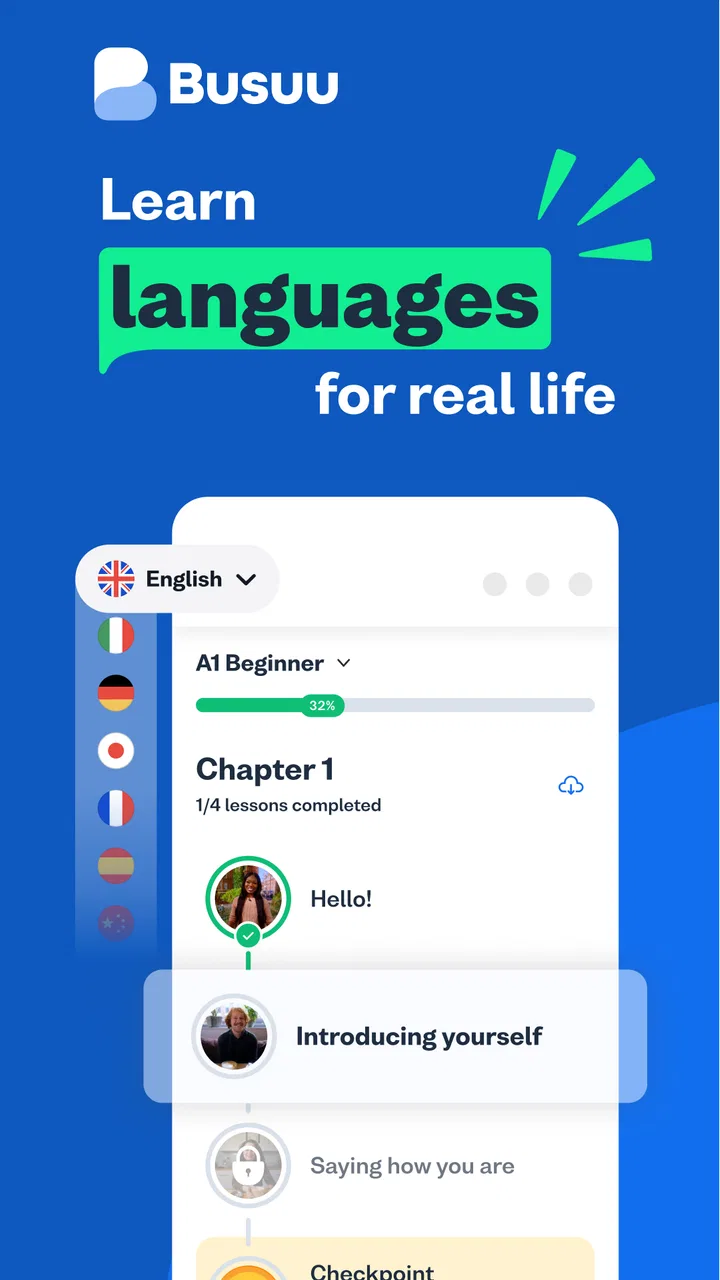
The strongest part of the experience is the sense of direction. Instead of opening a completely empty course and wondering what to do next, I can move through an ordered learning path. That matters when motivation is low: I do not have to spend several minutes choosing between vocabulary, grammar, review, and listening practice. The next useful activity is usually apparent.
The lesson format also breaks language learning into manageable pieces. I can work through a short exercise, see whether I understood it, and continue without needing to plan an entire study session. For a beginner, this is less intimidating than opening a large grammar reference. For someone returning after a long break, the guided progression makes it easier to restart instead of abandoning the course.
Text-heavy screens are generally familiar to anyone who has used a modern learning app, but readability depends on the learner. New vocabulary, instructions, answer choices, and explanations can appear close together, and a person with dyslexia, reduced vision, or limited reading stamina may need more time than the lesson design seems to assume. I would not describe the app as difficult to navigate, but I would describe it as dependent on being comfortable with compact educational screens.
I found it helpful to treat each lesson as a sequence rather than rushing through every available activity. When I made a mistake, slowing down and rereading the example was more valuable than immediately guessing again. This is a small workflow change, but it prevents the app from becoming a tapping exercise where I recognize the correct answer without understanding why it is correct.
Busuu is also easier to use when I keep one target language active at a time. The broad language selection is a benefit, but jumping between courses can scatter attention and make progress feel less visible. Learners who are studying two languages for separate reasons may appreciate the flexibility, while beginners who already feel overwhelmed should choose one course and keep the rest out of sight until a routine is established.
One practical limitation is that a structured path can feel restrictive to learners who only want a narrow topic. If I needed a quick set of phrases for a trip, a dedicated phrasebook or translation tool might get me to the answer faster. Busuu makes more sense when I want repeated practice and a sense of cumulative progress, not just an emergency translation.
Motor and sensory considerations
The interaction model is familiar: I select answers, move through prompts, read examples, listen to language, and may enter or produce responses. That variety keeps practice from feeling completely passive, but it also means the app is not equally comfortable for every motor ability. Frequent tapping or typing may be tiring for someone with limited dexterity, tremors, joint pain, or a device that is difficult to hold for long periods.
I would approach speaking activities with the same practical caution. They can make study feel more active and expose gaps that multiple-choice questions hide, but they may be less comfortable in a shared room, a noisy workplace, or a household where privacy is limited. A learner who cannot speak easily, or who prefers not to record their voice, may find that some of the most natural practice moments are also the least convenient.
Audio is central to learning pronunciation and listening, so headphones can make a meaningful difference in a busy environment. At the same time, relying on sound can exclude learners with hearing loss or those who cannot use audio consistently. I would use the written examples and visual answer feedback wherever possible, but I would not treat those as a full substitute for hearing the language. The app is strongest when the learner can combine visual and auditory practice.
For sensory-sensitive users, the safest approach is to study in short sessions with notifications and surrounding distractions under control. The lesson itself is more manageable when I focus on one task at a time, but language learning naturally involves switching between visual text, sound, and response input. Someone who is sensitive to rapid changes, repeated audio, or busy screens may prefer a slower pace and fewer exercises per sitting.
A useful adjustment is to separate skills instead of forcing a full session. I can spend one session reading and reviewing vocabulary, then use another quiet moment for listening. This does not remove every barrier, but it makes the app more adaptable to fatigue, pain, concentration limits, or an environment where speaking is not practical. In my experience, short, deliberate use is more sustainable than trying to complete a long lesson while distracted.
Parents and caregivers should also consider the learner’s independence. The Everyone age rating makes the app broadly approachable, but age suitability is not the same as effortless usability. A young learner may still need help deciding what a prompt means, correcting a misunderstanding, or staying focused when an exercise becomes repetitive. An adult with cognitive or attention-related needs may likewise benefit from a simple routine and a clear stopping point.
Using Busuu in real-life situations
The app fits particularly well into small gaps in the day. I can imagine using it during a commute, before an appointment, or while waiting for a friend, provided the setting allows concentration. A realistic routine would be to complete one focused lesson in the morning, revisit difficult words later, and reserve listening or speaking for a quiet place at home. That division makes the course more accessible than treating every session as a complete study block.
Travelers can use the app before a trip to build familiarity with everyday language, but I would not rely on it alone for urgent communication. A translation tool is usually faster when I need to understand a sign or produce a one-off sentence immediately. Busuu earns its place before that moment, when I have time to practice greetings, common structures, and listening patterns until they feel less foreign.
It can also suit adults who have tried language learning repeatedly and lost momentum. The guided format reduces the number of decisions involved in studying, which is important for people balancing work, family, or irregular schedules. I would not promise that every session feels fresh, but the app makes returning easier than opening a textbook at an arbitrary chapter and trying to remember where I stopped.
Students who already attend classes may use it as a supplement rather than a primary course. I found the app more useful for reinforcing material and maintaining contact with a language between lessons than for answering every detailed grammar question. A teacher can adapt an explanation to a learner’s exact confusion; an app can provide repetition and immediate practice more efficiently.
The same distinction matters for advanced learners. If I already read novels, follow broadcasts, and hold regular conversations, beginner and intermediate exercises may feel too controlled. Busuu can still help organize a weaker area or restart a neglected language, but advanced users should judge it by whether the available course level matches their needs. It is not automatically the best tool simply because it covers the language I want.
How it compares with familiar alternatives
Compared with a traditional textbook, Busuu is more convenient for brief sessions and immediate interaction. I do not need to carry a book or decide which exercise to mark next. The trade-off is that a textbook can offer a broader reference view, more room for personal notes, and a slower explanation of grammar. Learners who like to annotate everything may prefer using both rather than replacing one with the other.
Compared with a classroom, the app offers privacy and flexibility. I can repeat an exercise without feeling embarrassed, and I can study at an unusual hour. The cost of that flexibility is reduced human accountability. A teacher or classmate can notice a recurring pronunciation problem, clarify an ambiguous question, and push me to speak when I would otherwise remain comfortable with recognition exercises.
Compared with flashcard apps, Busuu provides more surrounding context. Memorizing a word is easier when I meet it inside a phrase or situation, but flashcards can be more efficient for targeted review and personal vocabulary lists. I would choose Busuu for guided learning and a flashcard system for words I repeatedly forget.
Compared with translation apps, it is slower but more educational. Translation tools solve immediate communication problems; Busuu helps me become less dependent on them. That difference is easy to miss when choosing an app, so I would decide based on the real goal: do I need an answer now, or do I want to build a skill that remains useful later?
Remaining barriers and the trade-offs behind them
The free entry point is helpful, especially for testing whether the teaching style suits me, but the presence of optional purchases means the complete experience may involve decisions about paid content. I would begin with the free portion and ask whether the included path supports my goal before spending money. The highest listed individual purchase is $169.99, so it is worth treating upgrades as a considered commitment rather than an automatic part of downloading the app.
The app’s popularity is encouraging: it has more than fifty million installs, an average rating of 4.7, around 1.1 million ratings, and roughly 18 thousand reviews. Those figures suggest that many people find it useful, but they do not guarantee that its lesson rhythm will suit me. A popular interface can still be tiring for a learner who needs larger text, slower pacing, alternative input, or less dependence on audio.
Device compatibility is another practical point. The current version is 32.30.0(1575420), and the minimum operating system is iOS 9 or later. Before planning a long course, I would check that an older phone or tablet can run the app comfortably and that its screen, speakers, and input method are suitable for the learner. Technical compatibility alone does not guarantee a comfortable study experience.
Busuu also requires honest expectations about progress. Completing exercises can create a satisfying feeling of movement, but recognition is not the same as spontaneous conversation. I would add real listening, writing, and speaking outside the app whenever possible. Even a simple habit—writing a few original sentences or saying new phrases aloud—helps expose weaknesses that a guided answer screen may conceal.
Another barrier is consistency. The app can make starting easy, but it cannot remove tiredness, competing responsibilities, or anxiety about speaking. Learners who need external accountability may do better with a class, tutor, or study partner alongside it. Conversely, people who dislike scheduled lessons may find its self-directed structure much less stressful than live instruction.
My inclusive verdict
I recommend Busuu to learners who want a clear, flexible route into a language and who can comfortably work with text, audio, tapping, and occasional speaking. Its biggest strength is not that it magically makes languages easy; it is that it turns an intimidating subject into a series of approachable tasks. That structure is valuable for busy adults, returning learners, travelers preparing in advance, and students who want extra practice between classes.
I would be more cautious if I needed highly specialized accessibility support, a completely audio-free method, minimal typing, or advanced conversation from the start. In those situations, a teacher, a specialized resource, a phrasebook, or a tool built around a different input style may be a better fit. Busuu can be part of an inclusive learning setup, but I would adapt the routine to the person rather than assuming one course design works equally well for everyone.
The app is free to begin, rated Everyone, and developed by Busuu, making it easy to try without turning the first step into a major commitment. My advice is to test a few lessons at the time of day when you would realistically study, not during an unusually motivated weekend. Notice whether the text is comfortable, whether audio works in your normal surroundings, and whether the exercises leave you understanding more rather than merely completing more.
My final view is that Busuu is a strong guided companion, especially when accessibility means flexibility, repetition, and control over pace. I would pair it with real-world practice and choose another resource when its reading, listening, or input demands conflict with a learner’s needs. Used that way, Busuu: Learn & Speak Languages feels less like a replacement for every other learning method and more like a practical foundation that can fit many different daily routines.
FAQs for Busuu: Learn & Speak Languages
01What is Busuu and how does it work?
Busuu is a language learning app that offers courses in 12 different languages. It uses a structured curriculum combined with interactive exercises, vocabulary building, and grammar lessons. The app also provides opportunities to practice speaking with native speakers and receive feedback, enhancing the learning experience.
02Is Busuu free to use, or are there any costs involved?
Busuu offers both free and premium versions. The free version includes basic lessons and vocabulary exercises. However, to access advanced features like grammar lessons, offline mode, and personalized study plans, you will need to subscribe to the premium version, which involves a monthly or yearly fee.
03How effective is Busuu for learning a new language?
Busuu is effective for beginners and intermediate learners due to its structured courses and interactive exercises. The app's community feature allows users to practice with native speakers, which can significantly improve speaking and listening skills. However, for advanced learners, the content might feel limited.
04Can I use Busuu offline?
Yes, Busuu offers an offline mode, but it's only available to premium subscribers. This feature allows you to download lessons and practice without an internet connection, making it ideal for users who want to learn on the go or in areas with limited connectivity.
05What devices and platforms is Busuu available on?
Busuu is available on both Android and iOS devices, and you can also access it via a web browser. This cross-platform availability ensures you can continue your language learning journey seamlessly across different devices, syncing your progress as you switch between them.
Pros
- Interactive lessons enhance learning.
- Wide variety of languages offered.
- Offline mode available for flexibility.
- Community feature for practice with natives.
- Personalized study plans adapt to progress.
Cons
- Limited free content available.
- Some languages lack comprehensive courses.
- Occasional app performance issues.
- Premium subscription can be costly.
- Pronunciation practice needs improvement.

Busuu: Learn & Speak Languages
Gallery